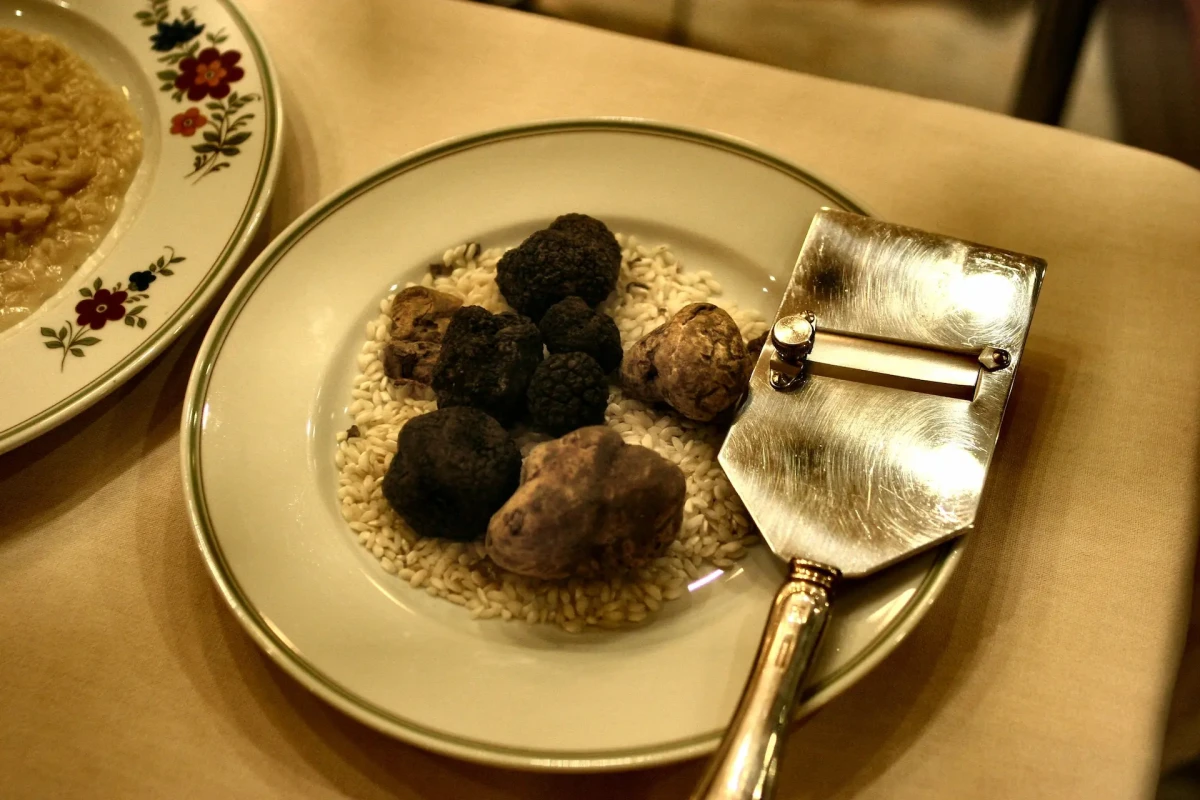

Hidden beneath the oak forests of the Mirna River valley, the white truffle is one of Istria’s most prized natural treasures. Renowned for its extraordinary aroma, rarity, and exceptional market value, this elusive underground fungus has earned Istria a place among the world's most celebrated culinary destinations.
The White Gold of Istria: The Elusive King of Underground Fungi
Deep beneath the damp canopy of the Mirna River valley lies what gastronomes call culinary gold: the wild Istrian white truffle (Tuber magnatum Pico). Far rarer and more valuable than its black counterpart, it cannot be cultivated or controlled by humans. Each specimen found in the oak woods around Motovun, Livade, and Buzet is a natural rarity, born from a delicate underground symbiosis between tree roots (pedunculate oak, willow, poplar, and hazel) and the valley’s waterlogged, alkaline gray clay.
What makes the white truffle so prized is its extraordinary aromatic chemistry. Unlike black varieties, which develop their flavours with gentle heat, white truffles are served raw, releasing an intense perfume of damp woodland soil, sweet wild garlic, honey, and aged cheese. Their delicate aromatic compounds begin evaporating as soon as the truffle is unearthed, making freshness essential. At peak quality, a freshly harvested white truffle retains its potency for barely a week, contributing to its status as one of the world's most expensive ingredients, often fetching thousands of euros per kilogram at autumn auctions.
The harvest season runs from September through December, with October and November considered the peak months, when autumn rains and cooler temperatures intensify the aromas. One of the most remarkable discoveries took place near Livade in 1999, when hunter Giancarlo Zigante and his dog Diana unearthed the legendary Millennium, weighing 1.31 kilograms. Recognised by Guinness World Records as one of the largest white truffles ever found, this discovery placed Motovun in Istria firmly on the global culinary map alongside Piedmont.
While white truffles attract international attention, Istrian black truffles remain essential to the region's cuisine. As the mild summer variety (Tuber aestivum) gives way to the more aromatic winter black truffle (Tuber brumale), these firmer varieties bring earthy, cocoa-like, and forest notes to local dishes. Unlike white truffles, they respond beautifully to gentle heat, enriching butter sauces, slow-cooked dishes featuring boškarin beef, and aged cheeses.
The Chase: Truffle Hunting in the Motovun Forest
Because these subterranean tubers grow hidden beneath tree roots, locating them requires centuries of inherited knowledge and the sharp instincts of trained dogs. For generations, local families (tartufari) have guarded their secret forest trails and underground patches, passing down a craft that defines inland Istria’s cultural identity. Today, this tradition is carried out not by commercial machinery, but by specially trained hounds - often crossbreeds or sharp-nosed Lagotto Romagnolo dogs - who form an unbreakable bond with their handlers.
Travelers can step directly into the crisp morning mist on guided excursions through the woods to witness truffle hunting in Croatia firsthand. The chase begins at dawn as the dogs work their way through the damp leaf litter, noses pinned to the mossy ground. The tension breaks when a dog wheels around, freezes, and begins digging furiously into the wet clay. Moving fast to protect the delicate find, the hunter rushes in with quiet commands, rewarding the dog with a pocket treat before taking over. Kneeling in the loam, the tartufar uses a specialized narrow spade (otka) to loosen the heavy earth by hand, unearthing the knobby, pale treasure undamaged while its pungent, wild fragrance immediately cuts through the autumn air.
Many families round off these morning excursions right at the forest edge, uncorking an early glass of young, crisp Malvazija Istarska alongside fresh sheep's milk cheese to toast a successful hunt before heading to the cellars.
Beyond the Woods: Motovun, Grožnjan, and Hum
The autumn ritual naturally expands beyond the forest floor to the medieval stone towns perched along inland Istria's rolling ridge roads:
Motovun, Croatia: Towering high above the Mirna valley, this fortified settlement often appears to float over the morning fog. Walking along its ancient Venetian ramparts offers sweeping panoramic views across the oak woods where the morning's truffles were foraged. The south-facing slopes below Motovun - particularly around the village of Kaldir - are blanketed in sunny terraced vineyards, home to acclaimed winemakers like Benvenuti and Fakin, who produce muscular, ruby-hued Teran wines born from the very same mineral soils.
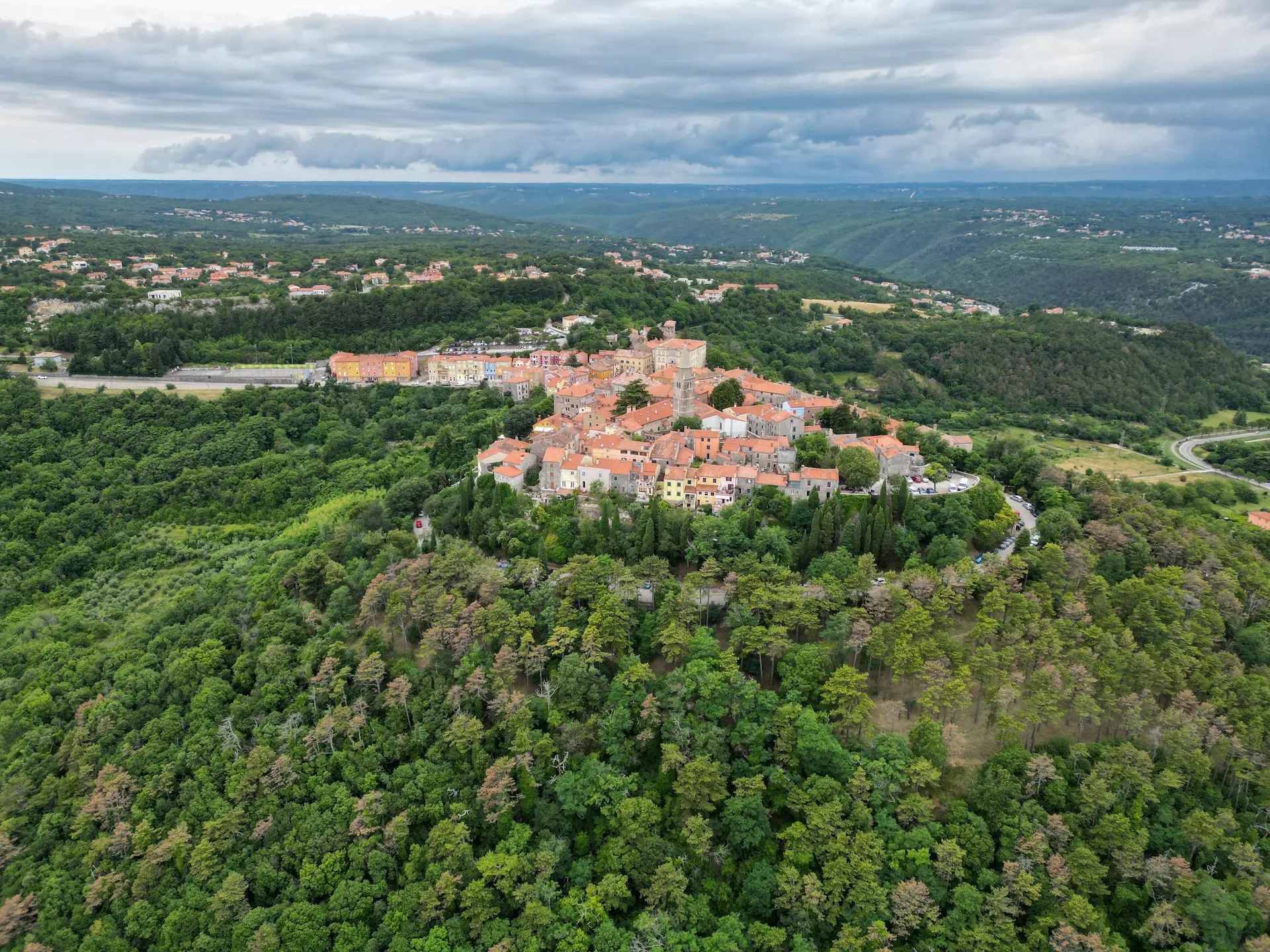
Grožnjan, Croatia: A short drive along scenic ridge roads leads to this quiet hilltop haven. Free from summer crowds, its cobblestone alleys, artisan ateliers, and open-air loggias regain their authentic, timeless pace. Sitting high above the Mirna gorge, Grožnjan borders the prestigious Momjan wine corridor, where cellar doors pour aromatic Muškat Momjanski (Momjan Muscat) and structured white blends that capture the crisp autumn breeze.
Buzet & Hum: East of the forest lies Buzet, officially recognized as Istria’s "City of Truffles" and the setting for vibrant autumn harvest festivals, including the legendary giant truffle omelet. Following the historic Glagolitic Alley leads to nearby Hum, celebrated as the smallest town in the world. Enclosed within medieval stone walls, Hum marks an essential stop for sampling traditional herbal digestifs like mistletoe brandy (biska), often sipped in rustic cellars alongside robust local red wines.
From Forest to Fork: The Table in Traditional Konobas
The journey culminates where the morning harvest meets the hearth. In family-run konobas (traditional taverns) and stone wine estates, the white truffle takes absolute precedence. Because heat destroys its volatile fragrance, it is never cooked into a simmering pan; local chefs shave the tuber raw and paper-thin directly at your table, letting the steam of the food release its intoxicating aroma.
The classics are intentionally simple to allow the tuber to shine: soft scrambled eggs (fritaja) cooked in farmhouse butter, warm sheep's curd, or handmade quill-shaped fuži and rolled pljukanci pasta.
The pairing of local wine is what completes the plate:
Aged Malvazija Istarska: Structured whites with brief skin maceration or subtle oak aging provide a creamy, saline counterpoint that balances the rich butter and earthy notes of white truffle pasta.
Istrian Teran: This high-acid, dark-berry red wine cuts effortlessly through richer courses like truffle-infused carpaccio, slow-braised boškarin beef, or aged mountain cheeses.
Surrounded by stone hearths, flickering candles, and cellars echoing with centuries of harvest stories, truffle hunting in Istria evolves from a wet forest trail into the Mediterranean's most grounded, sensory autumn feast.
Where to Stay: Autumn Retreats and Countryside Stone Villas
An authentic truffle journey calls for an equally relaxing base at the end of the day. Inland Istria’s countryside villas offer the ideal private retreat, tucked away on quiet hillsides around Motovun and Buzet. Built with traditional limestone walls, warm timber beams, and panoramic terraces overlooking mist-covered slopes and turning vineyards, these properties are perfectly suited for a peaceful autumn stay.
Handpicked Villas in Truffle Country
For a stay right in the heart of the region's hunting grounds and hilltop towns, these estates blend authentic Istrian charm with modern comfort:
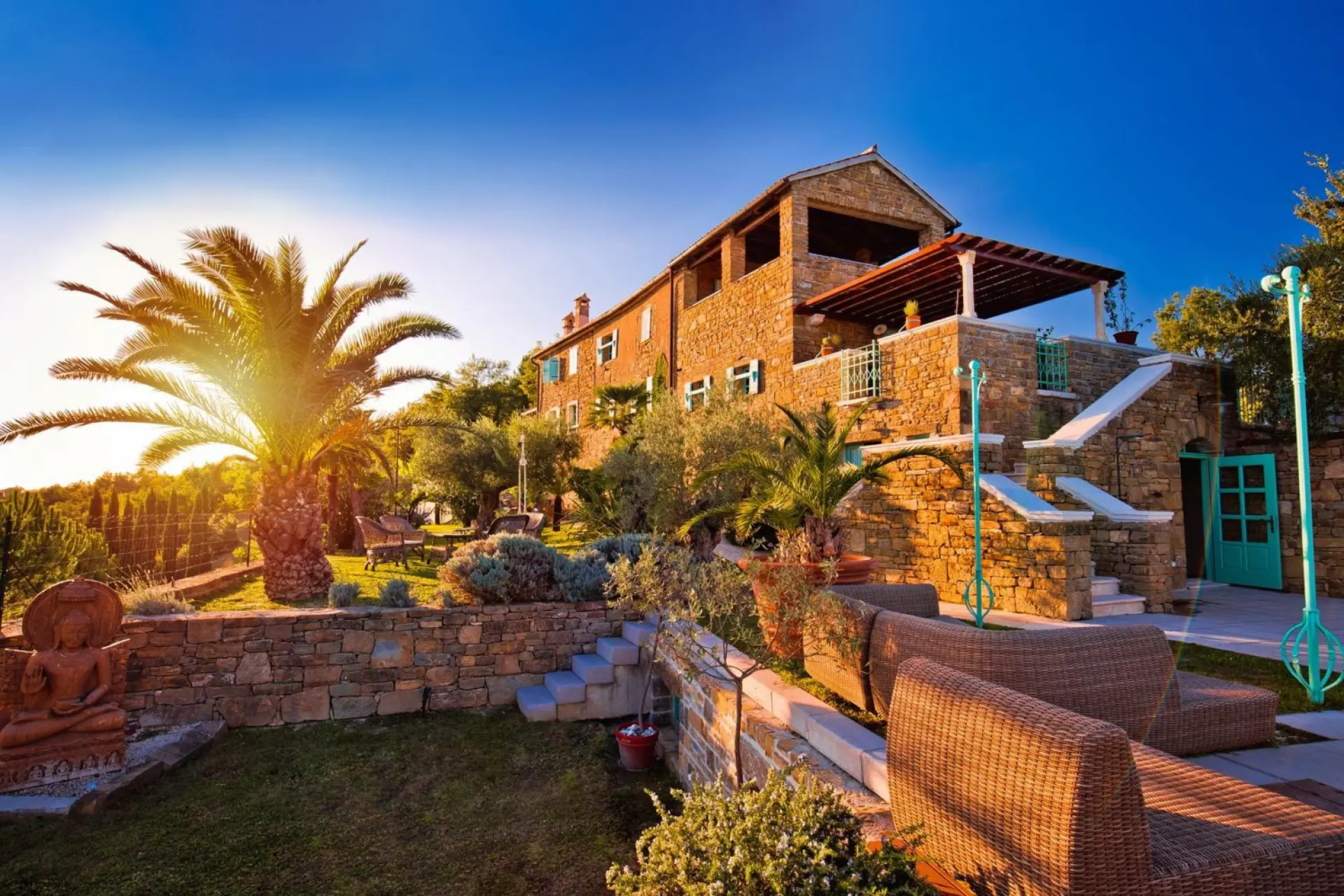
Villa Sancta Maria: A historic stone estate set in a quiet hamlet, offering spacious grounds and sweeping countryside views just above the Motovun Forest.
Villa Malvasia: Features classic stone architecture and warm, comfortable interiors, making it an inviting base close to local wineries and viewpoints.
Villa Oasis of Silence: Surrounded by dense woodland near Buzet, this secluded property provides complete privacy and fresh mountain air in the upper Mirna valley
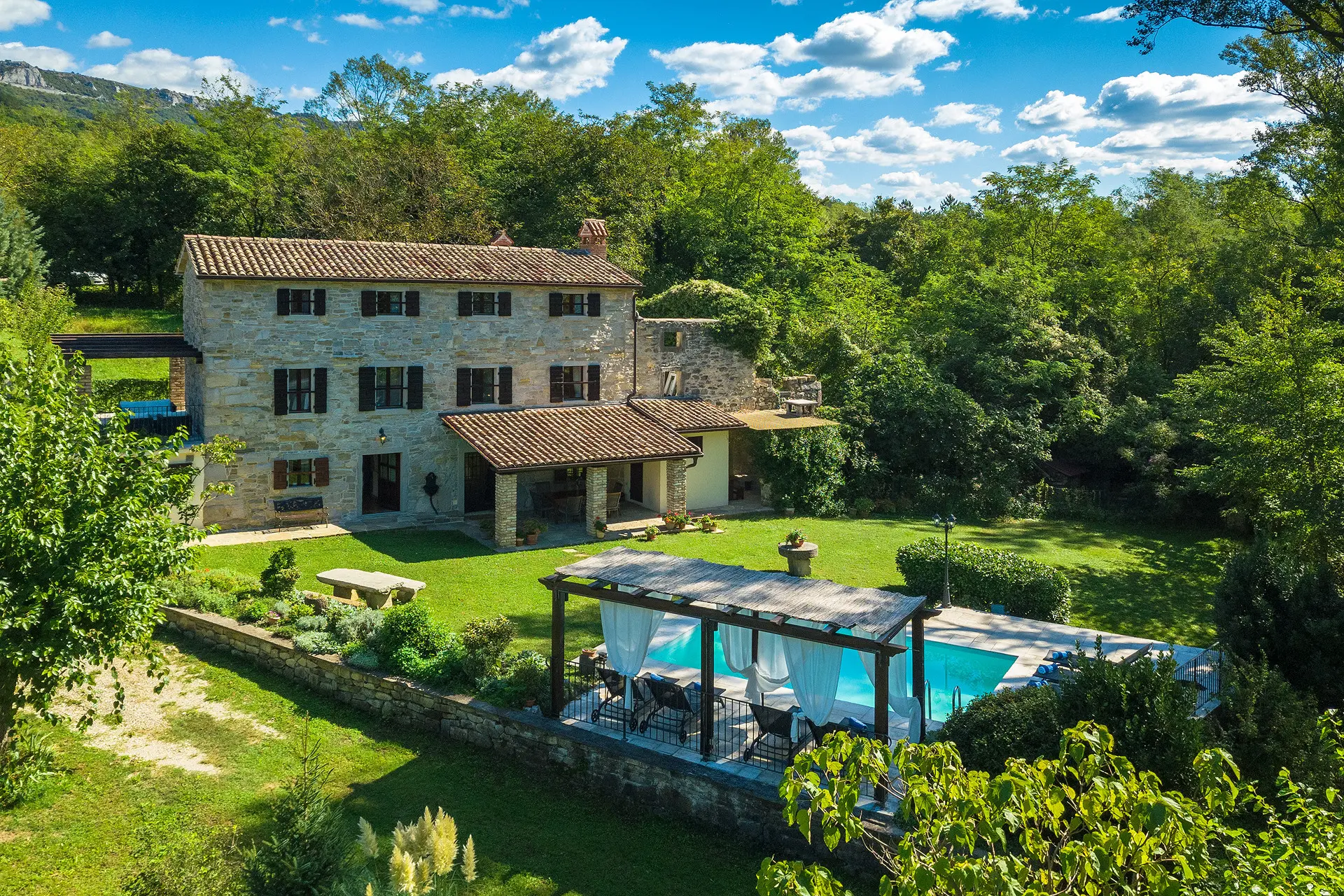
Villa Mulino: Located near Buzet’s autumn festival grounds, keeping you close to traditional konobas and morning hunting trails.
Villa L'Istra: Situated peacefully between Buzet and Motovun, offering a convenient starting point for exploring both medieval hilltop towns and forest routes.
Frequently Asked Questions About Truffles in Istria
1. When is the peak truffle season in Istria?
The prized white truffle (Tuber magnatum Pico) season runs strictly from September to December, with October and November marking the aromatic peak. Black truffles are foraged nearly year-round: summer black truffles (Tuber aestivum) from May to September, and winter black truffles through the colder months.
2. Where is the center of Istrian truffle country?
The epicenter lies in the damp Mirna River valley, specifically within the Motovun Forest and the surrounding areas of Livade and Buzet. The combination of humid gray clay, ancient oaks, and a mild microclimate creates optimal conditions for wild truffles.
3. Can tourists join a real truffle hunt in Croatia?
Yes. Licensed local families (tartufari) offer small-group and private hunting tours. Visitors head directly into the forest with trained dogs to witness how truffles are located and extracted, usually followed by an outdoor tasting or homemade meal paired with local wine. Because autumn is the peak season, booking in advance is strongly recommended.
4. What is the difference between Istrian white and black truffles?
White truffles are wild, impossible to cultivate, and far rarer, fetching significantly higher prices. They possess an intense, garlic-and-musk aroma that is destroyed by heat, which is why they are exclusively shaved raw over warm dishes. Black truffles have an earthier, milder flavor and can be gently warmed in butter or sauces during cooking.
5. Which traditional dishes should you order during the white truffle harvest?
Look for warm, butter-based dishes that allow the raw truffle shavings to release their aroma: handmade fuži or pljukanci pasta, creamy risotto, and soft scrambled eggs (fritaja). When ordering in a local konoba, always confirm whether the dish is finished with freshly shaved seasonal truffle rather than preserved truffle paste (tartufata).
6. Which towns should you explore during autumn in central Istria?
Base your route around Motovun and Buzet for truffle festivals, the artist village of Grožnjan for peaceful stone alleys and galleries, and Hum for historic ramparts and mistletoe brandy (biska). The nearby Momjan valley is essential for touring renowned family wine cellars.
7. Where is the best place to stay for a truffle getaway?
A private countryside villa around Motovun, Buzet, or Sveti Donat offers the ideal balance of seclusion and convenience. Staying in an authentic stone property places you within minutes of morning forest hunts and local taverns, while providing modern autumn comforts like fireplaces, heated pools, and open valley views.
Experience Truffle Season in Istria with My Luxoria
Discover the authentic culinary heritage of inland Istria from the comfort of a private countryside retreat. Whether you are returning from a morning hunt in the Motovun Forest or a slow afternoon touring Momjan wine cellars, our handpicked stone villas in Motovun, Buzet, and across Istria offer the perfect autumn sanctuary.
Explore our luxury villas in Istria and curate your seasonal gastronomic escape.